
About The New Dimension
Profile and background history
A brief introduction
Hi there, my name is Richard. During my C64 era, I have programmed many C64 games, written demos and intros and even composed music. I contributed a lot to the C64 scene and the internet C64 community. All of which is done as a general personal hobby, not as a profession.
Many years since I first wrote C64 programs, I am still going strong today. Although most of the time I mainly develop casual small game projects and SEUCK enhancements. Why do I enhance SEUCK games and make new stuff for the C64? It is mainly because I love the C64. I almost gave up with the C64 in the mid 1990s but I could not afford any better systems, so I decided to stick to the machine. The internet community is what has helped me become what I am today, and I am really proud that I am still making new games for a real classic machine.
I am also an editor of a free C64 disk magazine called "Scene World". I like visiting regional retro gaming events. These events contain so many good memories and classic video games. I will be looking forward to future events. If you read further through this page you will learn more about how I got to where I am today. A huge thank you goes to everybody who has helped me achieve my goals, and become a real successful individual in the C64 community.I aim to continue entertaining the C64 world with new productions for as long as I can.
How I first had my Commodore 64
Back in the late 1980s/1990s, I used to own a Commodore VIC20 computer, with a few games. I enjoyed the classic games, but found buying new games for it was much harder. Newsagents started removing the games off the racks, and the market stalls focused more on later generation computers. Since I saw "Commodore 64" tapes taking over the shelves everywhere. I decided that is the next computer I wanted. My wish came true, I first had my Commodore 64 as a Christmas gift on Christmas Day 1990. It was a Commodore 64C, which all came with a light fantastic pack, complete with a tape deck and a selection of computer games and utilities. The most popular utility I used was of course "The Shoot Em Up Construction Kit". I was also given some money to buy my very first ever C64 game. It was called "Sailing". Later on in 1990, I was introduced to Commodore Format by one of my uncles. It came with a cover tape, which contained two full games and two demos, and I started from issue 8 of the magazine. Later on I bought Zzap! 64, which was pretty quirky and fun to read. It also had a cover tape with some fun games. Jeff Minter's Revenge of the Mutant Camels was a real laugh back in time.
Making music
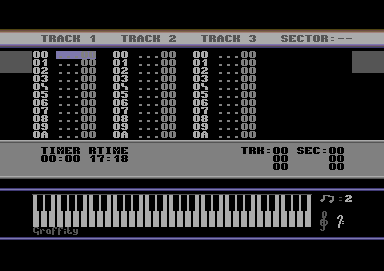
In the 1990s, I had the passion to make my own compositions. The subject I enjoyed the most at school was music. I played the keyboard a lot, and used to impress the music teacher and some of my classmates. However one thing I did not like was singing. When it comes to making music on the Commodore 64. The very first program I got into (before all the Public Domain stuff came in place) was Firebird Software's "The Music System". It was a hands on utility in which allowed you to place notes onto the screen and play them back. The only disadvantage was that the music editor was very limited to what it could do. However in 1994, Commodore Format did a feature, based on a utilities tape. It was the Binary Zone PD Utilities tape, which was crammed full of utilities suited for programming, text writing, drawing graphics and even making music. I grew very fond of three of the music composer tools. They were Music Assembler, Music Mixer 5, and the most favourite of them all, DMC V2.0 (For short DMC stands for Demo Music Creator). In 1994 - early 2000s, I had many PD disks from various PD libraries, the majority were utilities.The music editor that stood out the most for me, when it came to composing music was using DMC V4.0, due to its easy layout and professional look. You could even do a live play using it.
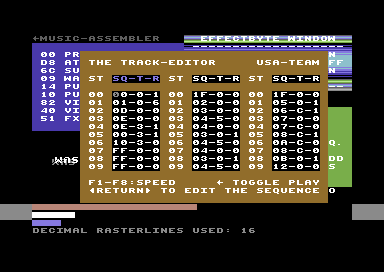
The Dutch USA Music assembler and Music Mixer had a built in IRQ player routine, making it possible to use the tunes inside my BASIC programs via a basic SYS call. Many of my PD games written in BASIC used either of those two tune sources. DMC ones required an additional IRQ interrupt to play them.
Example:(Left DMC V4.0B by Panic Design and Graffity - The very first DMC V4.0 I encountered from the Magna Musica disk. Right: Music Assembler)
There have been many music editors I have used in the past, but some composers just were too little or too much more advanced.
In the early 2000s - the present day. I have been composing tunes using Goat Tracker V2, CheeseCutter and occasionally SidFactory. These are all cross development C64 music editors in which are composed directly on your PC.
I have contributed thousands of C64 tunes to the C64 Scene (more like the scene extracts them and put them into a massive library called the HVSC, but I am very humbled with this).You may have heard many of my tunes appear on other people's C64 games, demos,intros, etc. This is the way the C64 scene works and it is so nice to see me credited as original composer for these productions.
Developing C64 games (SEUCK and BASIC)
In 1991, I created my very first game using the Shoot Em Up Construction Kit. It wasn't very good, and for a few years, I just used the attack patterns from the example games. The only difference was the graphics and sprites were drawn by myself. This was part of a learning curve. Most of my SEUCK games, back in that time were saved onto tape. This was until I had a 1541-II disk drive and Action Replay cartridge in 1992. I created many titles, but they were nothing good, quite laughable really. Some of my later SEUCK creations were much better. More about this later on/
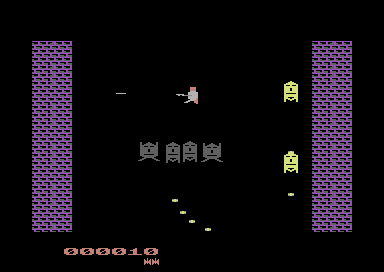
Example: Awful game made back in the early 1990s, Galactic Man. Go on, have a laugh :)
In 1994, I started learning some BASIC, and ended up writing some reflex testing games, in which had numbers appear on the screen. You had to press the space bar key to stop the numbers from swapping and if the numbers were incorrect to what the instructions. The game was called Cidcom. A pointless name of course, but I was a teen at the time.
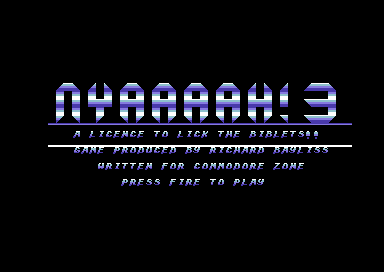
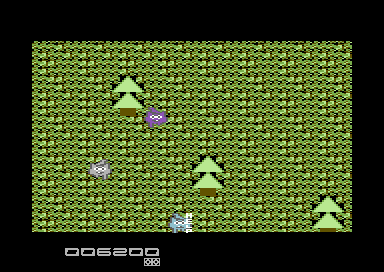
1995, was the year I had very bad news about Commodore Format folding its pages for good. However, there were some adverts on the magazine pointing to PD libraries. This sad news was announced to me by Binary Zone PD. I also remember writing to Binary Zone about SEUCK enhancements, and wondered how music got added to the games. I was also introduced to Commodore Zone, a fanzine which came complete with covermount of PD titles. In 1996, my very first SEUCK game appeared on its cover disk.It was perhaps one of my most funniest games to have appeared on the cover disk. That game of course was Nyaaaah! 3. Another two of my SEUCK games appeared on later Commodore Zone cover mounts, including Squibblies and Nyaaaah! 8.
Since then until 1999, I wrote loads of public domain games using the Shoot Em Up Construction Kit. A lot of them were bad, but not as bad for a student who was studying in college.
While I was still in the 1990s, I was trying to learn some new things, like for example how to use certain C64 utilities like a packer and a cruncher. I admit I had a silly obsession with those things back in those days.
Coding games on/for the C64
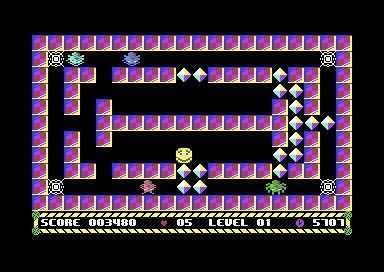
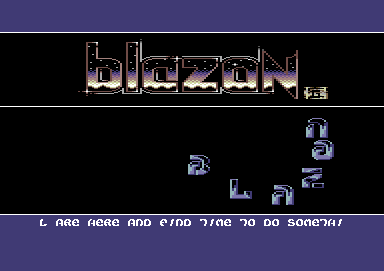
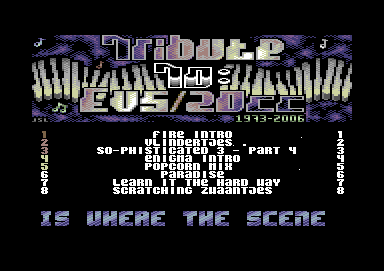
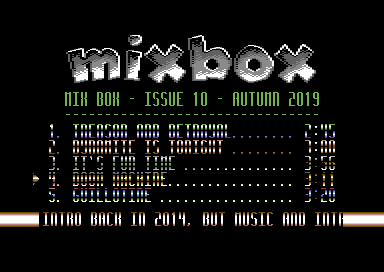
Although I was making mainly BASIC and SEUCK games. I wanted to get more involved in learning assembly programming. Sadly this venture did not begin until 1999. I found programming new C64 games in assembly to be really hard going for many years, but thankfully I managed to achieve some things from it. At the time I could only rely on magazines, fanzines, internet resources and c64 fanatics. I tried to learn as quick as I could. I managed to learn to make my very first assembly programmed game. However it was done the very hard way. I used an Action Replay cartridge and machine code monitor, and wrote Cetimiex. A rather bad jump and avoid game. Things did eventually get a lot better as I learned further into C64 programming. I wrote new games, intros, demos, etc. I joined a few demo groups to code intros, demos. I even ended up writing co-op game productions with another group or individual. Here are some examples of demos I did (2007 by Blazon, EVS Tribute by Civitas, Mixbox by TND), :
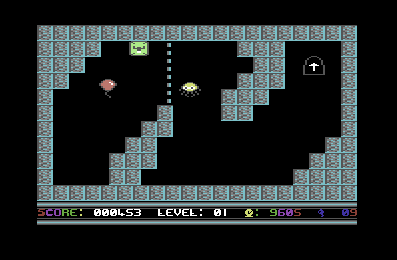
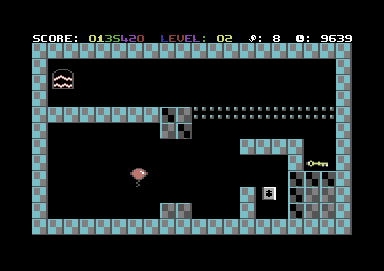
Anyway, back to games. The very first milestone was Balloonacy, a game which appeared on Commodore Zone's last ever cover mount. Later, it got published by Cronosoft on tape back in 2003. Later on with Balloonacy 2.. Balloonacy used a custom Public Domain turbo tape, and Balloonacy 2 used Freeload.
All games mentioned can be downloaded from the TND Games section
Pictured below: Balloonacy 1 and 2
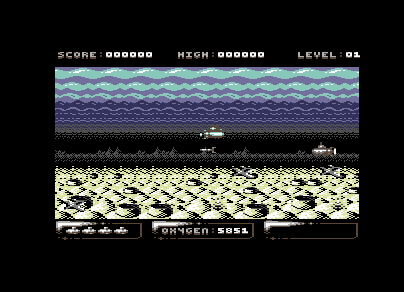
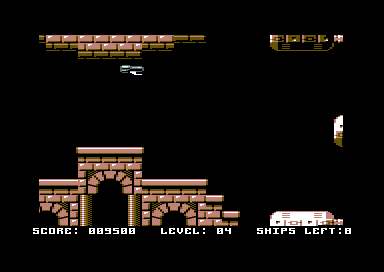
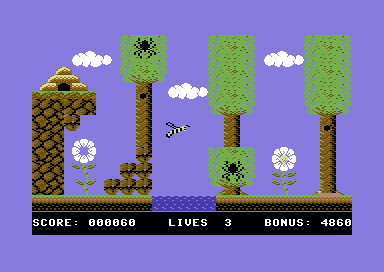
The next biggest milestone game project taken many years to develop with Frank Gasking,Sub Hunter, released back in December 2008 on TND. The game also released by Psytronik Software on tape and has been one of my most memorable pieces that took me forward to where I am today. Sub Hunter was a real hard game project, which contained a story and excellent music by Drax/Vibrants. The was great fun to develop. It was my first Psytronik Software game release, but a few more of my games were yet to come. The likes of X-Force (Featuring graphics by Saul Cross), Trance Sector, and Honey Bee (Featuring graphics by STE86 and sprites by Wayne/Art Ravers) appeared on the label as well.
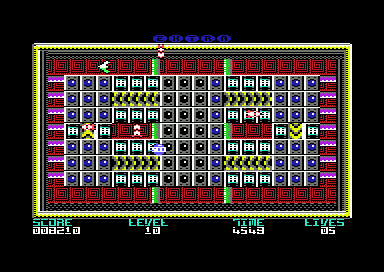
There were also some memorable games I wrote for fun for RGCD, which were Sheepoid DX (With Trevor Storey), Wooly Jumper (With Shaun Pearson), and Trance Sector Ultimate (With Akira and Saul Cross).
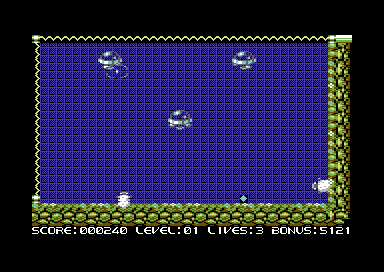
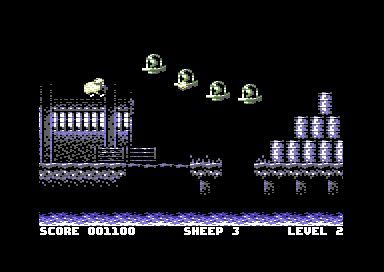
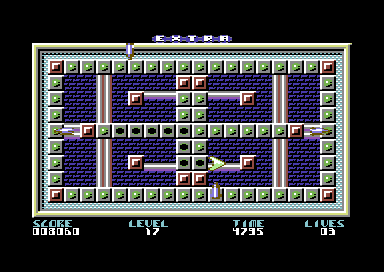
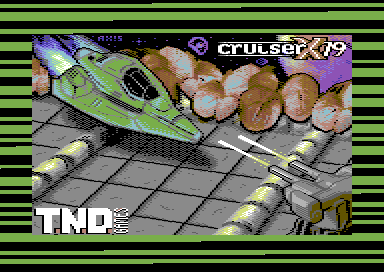
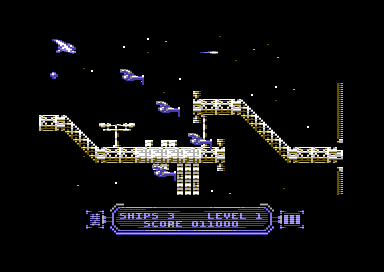
But it got even better on the game development front. Later games which were the biggest highlights for me Starfysh (Featuring graphics by Shaun Pearson), Amazon Tales (Featuring graphics by Alf Yngve), Shock Raid (Featuring graphics by Hugues Poisseroux) and Cruiser X 79 (Featuring graphics by Saul Cross).
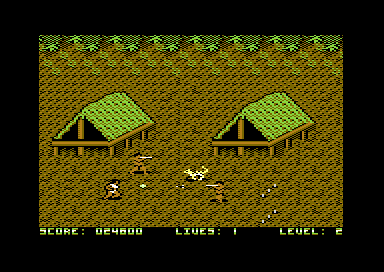
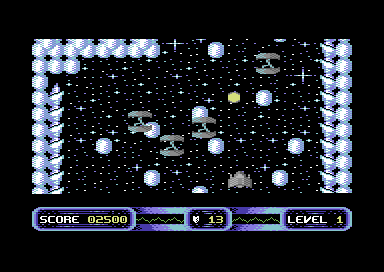
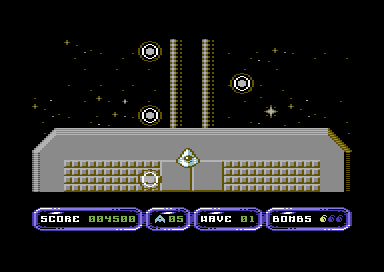
I entered a few C64 game coding competitions. The very first competition I may have entered, was a game for the C64 Crap Game Compo 2001, which was "Dots" and it indeed fitted the category. There were much more serious game competitions that had taken place. I entered a few 16KB cartridge game competitions, but sadly none of those were winners. I also contributed to 4KB and mini game competitions, but still didn't win on these. Still it is all the fun in taking part in the competitions, rather than winning.
Enhancing SEUCK games
You may have read back that I created games using the Shoot Em Up Construction Kit, and I even did a lot of bad games using it. There have been improvements in the 2000s, where I learned to make graphics, slightly more better and made very few creations, and transformed those into SEUCK School specimens. More on that later. Here's a little story on what encouraged me to learn to (and actually) enhance games that were created using the Shoot Em Up Construction Kit (And the later Sideways scrolling adaptation of SEUCK).
It started with issue 26 of Commodore Format appearing on the shelves at the local newsagents. The magazine came with a cover tape that had 5 programs on that particular issue. They were three full games (one budget game, and two reader games) and two playable demos. The reader games were "Bomber" by Uzzy/Entropy and "Twin Tigers" by Alf Yngve (The magazine mistakenly called it Twin Tiger). Unlike the majority of SEUCK games that appeared on magazine cover tapes, this game featured a new front end, music and a few complimentary hacks by Jon Wells. The game was still a SEUCK game, but it did have amazing features which Jon implemented into the title. Then issue 31 featured "Monster Mash", which was written by Jon, himself. The front ends and additional code really made the game stood out. It made me wish "I wish I could do that".
Issues 39,41,43 and 45 of Commodore Format featured "The Secrets of SEUCKCess", which was based on enhancing SEUCK games using BASIC listings. I remember having a go at doing this. I even learned how to include Music Assembler / Music Mixer music onto those BASIC programs back in 1994. I wrote a few games and typed in the reset hack, and SEUCK with BASIC listings, loaded up custom made fonts and then bolted them onto my old SEUCK games. Unfortunately nothing got publicly released because I did not know about PD libraries at the time of doing this.
The first thing I learned in enhancing SEUCK games was to editing the colour bars and adding music onto the title screen. The other things I learned were later on. This was where I was involved the C64 internet community. I learned a few tricks by contacting some people who previously enhanced SEUCK games. Then wrote some notes and tried to implement features. Then I explored the standalone game engine even further and I managed to program new front ends, add power ups, and make boss enemies explode as a whole. I even managed to make a game enhancement which bolted two players together, shared scores and lives. Although I talked about it a retro gaming events, I was tempted to make a Light Force style game for the C64, ironically calling it "Dark Force". It was moving forward the possibilities of what could be done using the Shoot Em Up Construction Kit. ... but was it?
Huntress of Midgard (by Eleanor Burns), and Dark Force showing the possibilities of score sharing and linked players. Something of which I managed to achieve on my own.
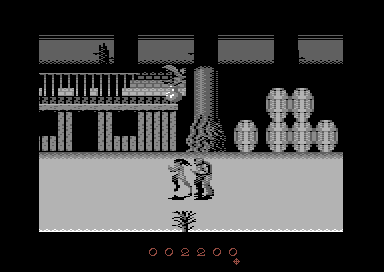
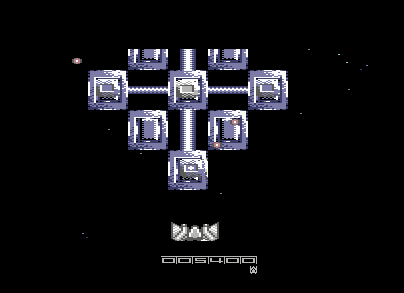
After many years learning to enhance SEUCK games, I made a SEUCK enhancement programming framework, and also a tutorial with coding tips on how to enhance SEUCK games. SEUCK School was born.
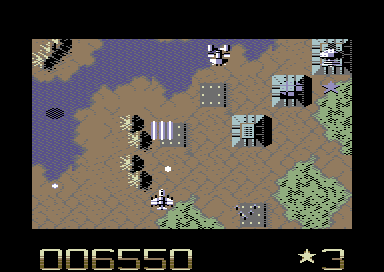
I learn a lot with SEUCK, I even got to learn how to use Martin Piper's SEUCK Redux. It is basically a framework which allows you to import your own "Save all data" state into a new scroller and animation framework. It even gives you the capabilities to fully transform your creation into something much more spectacular. This was used on Alf Yngve's later releases, and with further imagination and commitment to programming your own enhancements, such as aim trajectory functions, shootable bullets, and less slow down - it made SEUCK games become non SEUCK. The only disadvantage was that the frame work can only run on PAL systems. The biggest milestone for me was the Zap Fight series and of course Captain Ishtar by Alf Yngve. All SEUCK and SEUCK Redux enhancements I have been doing with were done voluntarily.
Tape Mastering
During my past time C64 history, I have been involved in mastering digital tapes for TND releases, and also other community releases. You may have noticed my name credited on most tape versions of Psytronik releases. Tape mastering was done on a voluntarily basis, and as part of friendship. The majority of the tape loader sources were by Martin Piper. I was given his blessing to be able to use the loaders and modify the source code, to suit the games. The tape images were first formed by making tape master disks, then files were loaded from a C64 disk, and the written to tape. I wrote Tape Master Pro, a handy utility that allowed to master a machine code game (with a BASIC SYS run start address) from a disk, to tape.
Before mastering programs to tape, you could type in a loading scroll text, setup the loading music and picture filename and select the flashing border colour scheme (Or choose thin stripes for a more professional look). The master is then saved to disk, and runnable via a SYS49152 command (or if crunched to an executable with a packer like BYG Compactor + or exomizer) and then you can record your game to tape. After recording, you can test the program to load and run. This is usually how the tape mastering works. Later on I used tape tool V1.0.0.7 which features RLE, modify the code to suit the loader system, and then call a batch file to make a test tape image. If happy, I can then do a split version, and use audio tap and sound editing software to make the final master, then use audio tap to convert back to C64 tape format. The real headache for me was making tape multi load programs. Cruiser-X 79 used a different tape loader (Freeload and PRG2TAP), due to a massive string of filenames required.
Amazon Tales used Tape Tool V1.0.0.5, which eventually become Tape Master Pro V4.0 (without the additional features on the Amazon Tales loader, such as the Press Space sprite)
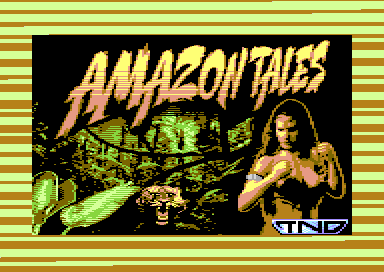
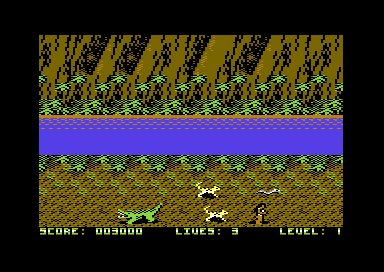
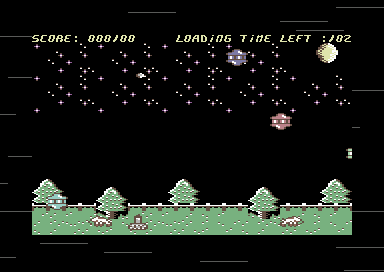
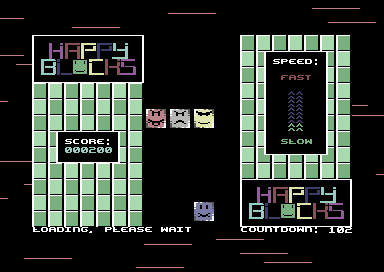
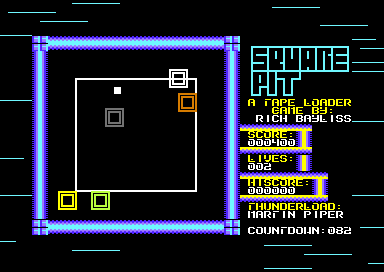
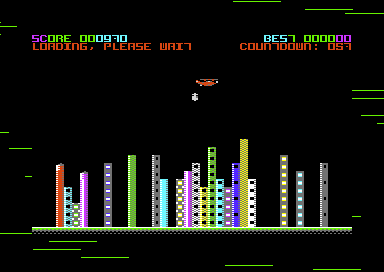
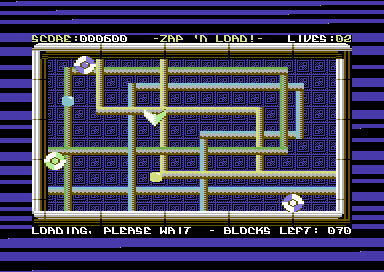
I also made loader games (Games which you could play while main games loaded from tape). I loved the nostalgia of playing Invade-A-Load, and Micro Painter, while waiting for a budget game to load and run. I wrote five non commercial tape loader games which featured on many TND releases that had no loading bitmaps. The games were MooTilation; a game in which you had to save your farm cows from being pilfered by aliens, Happy Blocks; a game in which you have to dodge enemy blocks that trundled near by.Later Happy Blocks got transformed into a hi score attack challenge in 2018. Square Pit (A tape loader version of the Civitas collect and avoid game), Blitz A Load (A tape loader game in which resembles the classic type in game, Blittz), and finally Zap 'N Load (A psychedelic shoot 'em up with a difference).
Screen shot examples of loader games MooTilation, Happy Blocks, Square Pit, Blitz A Load, Zap 'n Load. All games were transformed into the Loader Game Tape Master Kit, which you can find in the Utilities page.
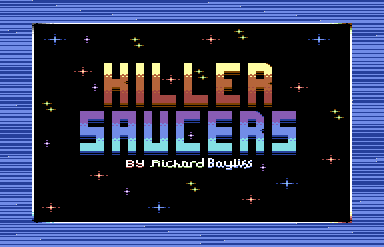
The very first tape turbo loader system I remember using back in time was Loader Maker by Jason Finch. It was given away on the 37th cover tape of Commodore Format magazine. The program allowed you to master a slow loading BASIC program with a much faster one. There were also some fun options that allowed you to include a picture drawn with Saracen Paint with the loader. I used this loader later on for "Killer Saucers", when I did my own theC64 challenges between 2018-2022. There's more about the challenges in the next topic.
Killer Saucers tape loader, featuring the Commodore Format Loader Maker by Jason Finch.
Before using TapeTool, and Freeload. I had very limited resources to master programs from disk to tape for the TND web site. I used DoSoft's Disk to Tape Extra, Stephen Senz's Spectacular Copy, the 202 Turbo system, The BWB tape mastering system and also a few other disk/tape tools that were released in the public domain.
theC64 Challenges
Back in 2018, theC64 mini was launched, and a year and a half later theC64 full size was released. I had a theC64 full size for Christmas from my brother in 2019. I didn't just want to play games on these devices, I also wanted to try and use the limitations of the machines and I set myself theC64 coding challenges. I used a range of disk images with useful tools and then program stuff from it. Here is what I made using theC64
theC64 intro
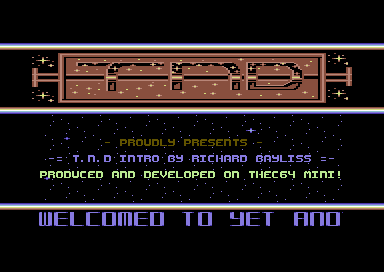
This was my very first challenge I set myself. It only took a few days, due to free time limitation, due to my previous occupation. I coded and made my very first theC64 program using a series of Public Domain utilities, such as Centauri Logo Editor, Char Editor V2.0, DMC V6.0 and also Turbo Assembler with a separate machine code monitor. It shows what could be possible with limitations of not having features such as an Action Replay cartridge.
Storm Chase
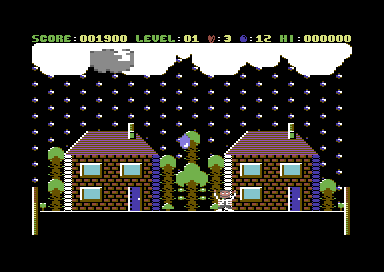
I wanted to go one step further. When I first had my theC64 full size computer, I remember having a lot of fun making an intro. So I thought it would be great fun to write an actual full game using it. Only two games were successfully made on theC64, three failed, or partially failed. I have included those on my list anyway. The first game I wrote on theC64 was called Storm Chase. It was a "Mad Bomber" style game, in which you played a kid who had to run and stop rain from flooding your village. The only problem is that if the flood barriers rise too high, or the kid gets struck by lightning, a life is lost. The game was programmed in Turbo Assembler, with aid of Padua's Code Suck Monitor, and a set of PD utilities.
The Forever Extending Hungry Snake
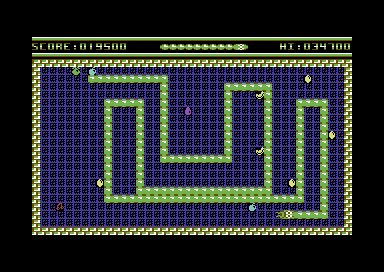
The second in my coding challenges was the Forever Extending Hungry Snake. It was basically one of those snake type of games, but with a difference. The snake was forever growing and has to eat fruit for points, collect bombs to clear the arena (and shed its skin), but avoid biting itself, crashing into walls, or skulls that appear from nowhere. The game was programmed using a later firmware that supported the Action Replay cartridge plug in, and Turbo Assembler. The game also had catchy tunes which I composed using Graffity's DMC V2.0.
theC64 Challenges that failed
Killer Saucers
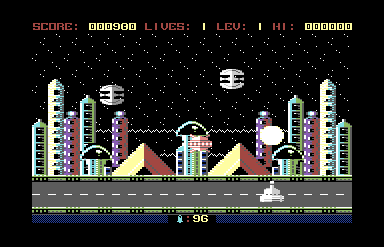
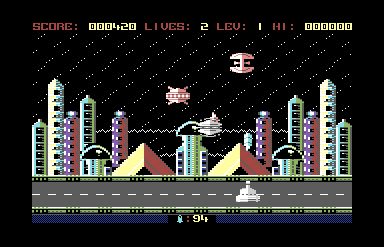
This game was aimed to be the Commodore Format Power Pack challenge, as a celebration of CF's 30th anniversary. The challenge was to create a develop a C64 game using only the utilities that were available on the Commodore Format power pack tape. I chose to use the UDG system (CF19), Format's Really Original Sprite Thingy (CF32), and 6510+ assembler (CF45), while sfx was to be made using Achim Volker's SFX editor. The main game project was progressing quite well, but near to completion I was unable to type any more code into memory. Therefore the project was moved to C64Studio, which I polished up the graphics, did some more enhanced coding and use Goat Tracker to make the music. The game itself turned out nicely, despite the failure of the limitations of 6510+ assembler.
Paralander DX
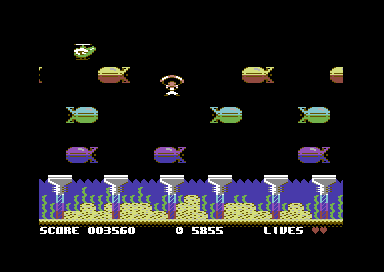
This was going really well, but I failed near to the end of the project, due to bugs in the assembler I used. Paralander DX was a deluxe version of Paralander Mini, which I wrote as part of the Cassette 50 charity competition. The game was programmed in Turbo Macro Pro, where graphics were designed using the Multi Screen Construction Kit. Music was made using DMC V4.0. Although things were going really well in programming this project and I was very close to completion. I encountered pitfalls with the Turbo Macro Pro assembler, which truncated some of my code. I was running very low on memory, and had to finish the project off in 64TASS instead. After the project was finished I converted all of the code back to Turbo Macro Pro, for those who would like to explore more of the game code. The overall project did not turn out too bad, and it wasn't a massive failure.
Poing Ultra
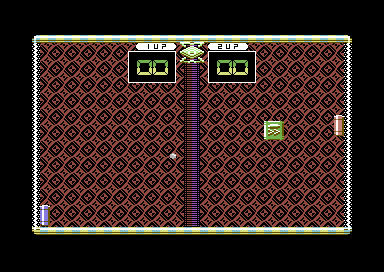
Not exactly a complete failure, since the game was completed, but I accidentally did not write the title screen code separately, which broke the listing. Poing Ultra is a polished Pong game, in which you could play against a friend or against the computer. The game was programmed in Turbo Macro Pro (then finished off in 64TASS), while graphics was made in Multi Screen Construction Kit, and sprites in Faces' Sprite Editor V2.0. Music (as usual) was made in DMC V4.0. The result as usual turned out really nice, and the game was submitted to the Pong 50 years game jam, hosted by Retro Programmers Inside and Phaze 101.
So there you go, that's all I feel like writing. Now here are my top 5 C64 games.
My top 5 C64 games of all time
Top 5 platform games (1984-1993)
1. Mayhem in Monsterland (Apex)
2. Creatures (Thalamus)
3. DJ Puff's Volcanic Capers (Codemasters)
4. Rainbow Islands (Ocean)
5. Flimbo's Quest (System 3)
Top 5 action games (1984-1993)
1. Last Ninja 2 (System 3)
2. MYTH (System 3)
3. Beach Head 2 (EPYX)
4. Impossible Mission 2 (EPYX)
5. Arnie (Zeppelin)
Top 5 space shooters (1984-1993)
1. Armalyte (Thalamus)
2. R-Type (Electric Dreams)
3. Slayer (Hewson)
4. I-O (Firebird/Zeppelin Games)
5. Hunter's Moon (Thalamus)
Top 5 Puzzle Games (1984-1993)
1. Puzznic (Ocean)
2. Anarchy (Hewson)
3. SWAP (Palace)
4. Confuzion (Incentive)
5. Tetris (Mastertronic)
Top 5 magazine cover tape SEUCK games (1990 -1995)
1. Twin Tigers
2. Aqua Blasta
3. Shot Away
4. Blue Encounter
5. Chaos Road
Top 5 racers
1. Turbo Outrun (US Gold)
2. Stunt Car Racer (MicroStyle)
3. 5th Gear (Hewson)
4. Continental Circus (Mastertronic Plus)
5. Super Sprint (Electric Dreams)
Top 5 8 bit arcade conversions (1984-1993)
1. S.W.I.V (Storm)
2. St. Dragon (Storm)
3. Super Space Invaders (Domark)
4. Arkanoid - Revenge of Doh (Imagine)
5. Rainbow Islands (Ocean)
Top 5 amazing oddities (1984-1993)
1. Wizzball (Ocean)
2. Dropzone (US Gold)
3. I-Ball (Firebird)
4. Hopiing Mad (Elite)
5. Revenge of the Mutant Camels (Llamasoft)
Hi there, my name is Richard. During my C64 era, I have programmed many C64 games, written demos and intros and even composed music. I contributed a lot to the C64 scene and the internet C64 community. All of which is done as a general personal hobby, not as a profession.
Many years since I first wrote C64 programs, I am still going strong today. Although most of the time I mainly develop casual small game projects and SEUCK enhancements. Why do I enhance SEUCK games and make new stuff for the C64? It is mainly because I love the C64. I almost gave up with the C64 in the mid 1990s but I could not afford any better systems, so I decided to stick to the machine. The internet community is what has helped me become what I am today, and I am really proud that I am still making new games for a real classic machine.
I am also an editor of a free C64 disk magazine called "Scene World". I like visiting regional retro gaming events. These events contain so many good memories and classic video games. I will be looking forward to future events. If you read further through this page you will learn more about how I got to where I am today. A huge thank you goes to everybody who has helped me achieve my goals, and become a real successful individual in the C64 community.I aim to continue entertaining the C64 world with new productions for as long as I can.
How I first had my Commodore 64
Back in the late 1980s/1990s, I used to own a Commodore VIC20 computer, with a few games. I enjoyed the classic games, but found buying new games for it was much harder. Newsagents started removing the games off the racks, and the market stalls focused more on later generation computers. Since I saw "Commodore 64" tapes taking over the shelves everywhere. I decided that is the next computer I wanted. My wish came true, I first had my Commodore 64 as a Christmas gift on Christmas Day 1990. It was a Commodore 64C, which all came with a light fantastic pack, complete with a tape deck and a selection of computer games and utilities. The most popular utility I used was of course "The Shoot Em Up Construction Kit". I was also given some money to buy my very first ever C64 game. It was called "Sailing". Later on in 1990, I was introduced to Commodore Format by one of my uncles. It came with a cover tape, which contained two full games and two demos, and I started from issue 8 of the magazine. Later on I bought Zzap! 64, which was pretty quirky and fun to read. It also had a cover tape with some fun games. Jeff Minter's Revenge of the Mutant Camels was a real laugh back in time.
Making music
In the 1990s, I had the passion to make my own compositions. The subject I enjoyed the most at school was music. I played the keyboard a lot, and used to impress the music teacher and some of my classmates. However one thing I did not like was singing. When it comes to making music on the Commodore 64. The very first program I got into (before all the Public Domain stuff came in place) was Firebird Software's "The Music System". It was a hands on utility in which allowed you to place notes onto the screen and play them back. The only disadvantage was that the music editor was very limited to what it could do. However in 1994, Commodore Format did a feature, based on a utilities tape. It was the Binary Zone PD Utilities tape, which was crammed full of utilities suited for programming, text writing, drawing graphics and even making music. I grew very fond of three of the music composer tools. They were Music Assembler, Music Mixer 5, and the most favourite of them all, DMC V2.0 (For short DMC stands for Demo Music Creator). In 1994 - early 2000s, I had many PD disks from various PD libraries, the majority were utilities.The music editor that stood out the most for me, when it came to composing music was using DMC V4.0, due to its easy layout and professional look. You could even do a live play using it.
The Dutch USA Music assembler and Music Mixer had a built in IRQ player routine, making it possible to use the tunes inside my BASIC programs via a basic SYS call. Many of my PD games written in BASIC used either of those two tune sources. DMC ones required an additional IRQ interrupt to play them.
Example:(Left DMC V4.0B by Panic Design and Graffity - The very first DMC V4.0 I encountered from the Magna Musica disk. Right: Music Assembler)
There have been many music editors I have used in the past, but some composers just were too little or too much more advanced.
In the early 2000s - the present day. I have been composing tunes using Goat Tracker V2, CheeseCutter and occasionally SidFactory. These are all cross development C64 music editors in which are composed directly on your PC.
I have contributed thousands of C64 tunes to the C64 Scene (more like the scene extracts them and put them into a massive library called the HVSC, but I am very humbled with this).You may have heard many of my tunes appear on other people's C64 games, demos,intros, etc. This is the way the C64 scene works and it is so nice to see me credited as original composer for these productions.
Developing C64 games (SEUCK and BASIC)
In 1991, I created my very first game using the Shoot Em Up Construction Kit. It wasn't very good, and for a few years, I just used the attack patterns from the example games. The only difference was the graphics and sprites were drawn by myself. This was part of a learning curve. Most of my SEUCK games, back in that time were saved onto tape. This was until I had a 1541-II disk drive and Action Replay cartridge in 1992. I created many titles, but they were nothing good, quite laughable really. Some of my later SEUCK creations were much better. More about this later on/
Example: Awful game made back in the early 1990s, Galactic Man. Go on, have a laugh :)
In 1994, I started learning some BASIC, and ended up writing some reflex testing games, in which had numbers appear on the screen. You had to press the space bar key to stop the numbers from swapping and if the numbers were incorrect to what the instructions. The game was called Cidcom. A pointless name of course, but I was a teen at the time.
1995, was the year I had very bad news about Commodore Format folding its pages for good. However, there were some adverts on the magazine pointing to PD libraries. This sad news was announced to me by Binary Zone PD. I also remember writing to Binary Zone about SEUCK enhancements, and wondered how music got added to the games. I was also introduced to Commodore Zone, a fanzine which came complete with covermount of PD titles. In 1996, my very first SEUCK game appeared on its cover disk.It was perhaps one of my most funniest games to have appeared on the cover disk. That game of course was Nyaaaah! 3. Another two of my SEUCK games appeared on later Commodore Zone cover mounts, including Squibblies and Nyaaaah! 8.
Since then until 1999, I wrote loads of public domain games using the Shoot Em Up Construction Kit. A lot of them were bad, but not as bad for a student who was studying in college.
While I was still in the 1990s, I was trying to learn some new things, like for example how to use certain C64 utilities like a packer and a cruncher. I admit I had a silly obsession with those things back in those days.
Coding games on/for the C64
Although I was making mainly BASIC and SEUCK games. I wanted to get more involved in learning assembly programming. Sadly this venture did not begin until 1999. I found programming new C64 games in assembly to be really hard going for many years, but thankfully I managed to achieve some things from it. At the time I could only rely on magazines, fanzines, internet resources and c64 fanatics. I tried to learn as quick as I could. I managed to learn to make my very first assembly programmed game. However it was done the very hard way. I used an Action Replay cartridge and machine code monitor, and wrote Cetimiex. A rather bad jump and avoid game. Things did eventually get a lot better as I learned further into C64 programming. I wrote new games, intros, demos, etc. I joined a few demo groups to code intros, demos. I even ended up writing co-op game productions with another group or individual. Here are some examples of demos I did (2007 by Blazon, EVS Tribute by Civitas, Mixbox by TND), :
Anyway, back to games. The very first milestone was Balloonacy, a game which appeared on Commodore Zone's last ever cover mount. Later, it got published by Cronosoft on tape back in 2003. Later on with Balloonacy 2.. Balloonacy used a custom Public Domain turbo tape, and Balloonacy 2 used Freeload.
All games mentioned can be downloaded from the TND Games section
Pictured below: Balloonacy 1 and 2
The next biggest milestone game project taken many years to develop with Frank Gasking,Sub Hunter, released back in December 2008 on TND. The game also released by Psytronik Software on tape and has been one of my most memorable pieces that took me forward to where I am today. Sub Hunter was a real hard game project, which contained a story and excellent music by Drax/Vibrants. The was great fun to develop. It was my first Psytronik Software game release, but a few more of my games were yet to come. The likes of X-Force (Featuring graphics by Saul Cross), Trance Sector, and Honey Bee (Featuring graphics by STE86 and sprites by Wayne/Art Ravers) appeared on the label as well.
There were also some memorable games I wrote for fun for RGCD, which were Sheepoid DX (With Trevor Storey), Wooly Jumper (With Shaun Pearson), and Trance Sector Ultimate (With Akira and Saul Cross).
But it got even better on the game development front. Later games which were the biggest highlights for me Starfysh (Featuring graphics by Shaun Pearson), Amazon Tales (Featuring graphics by Alf Yngve), Shock Raid (Featuring graphics by Hugues Poisseroux) and Cruiser X 79 (Featuring graphics by Saul Cross).
I entered a few C64 game coding competitions. The very first competition I may have entered, was a game for the C64 Crap Game Compo 2001, which was "Dots" and it indeed fitted the category. There were much more serious game competitions that had taken place. I entered a few 16KB cartridge game competitions, but sadly none of those were winners. I also contributed to 4KB and mini game competitions, but still didn't win on these. Still it is all the fun in taking part in the competitions, rather than winning.
Enhancing SEUCK games
You may have read back that I created games using the Shoot Em Up Construction Kit, and I even did a lot of bad games using it. There have been improvements in the 2000s, where I learned to make graphics, slightly more better and made very few creations, and transformed those into SEUCK School specimens. More on that later. Here's a little story on what encouraged me to learn to (and actually) enhance games that were created using the Shoot Em Up Construction Kit (And the later Sideways scrolling adaptation of SEUCK).
It started with issue 26 of Commodore Format appearing on the shelves at the local newsagents. The magazine came with a cover tape that had 5 programs on that particular issue. They were three full games (one budget game, and two reader games) and two playable demos. The reader games were "Bomber" by Uzzy/Entropy and "Twin Tigers" by Alf Yngve (The magazine mistakenly called it Twin Tiger). Unlike the majority of SEUCK games that appeared on magazine cover tapes, this game featured a new front end, music and a few complimentary hacks by Jon Wells. The game was still a SEUCK game, but it did have amazing features which Jon implemented into the title. Then issue 31 featured "Monster Mash", which was written by Jon, himself. The front ends and additional code really made the game stood out. It made me wish "I wish I could do that".
Issues 39,41,43 and 45 of Commodore Format featured "The Secrets of SEUCKCess", which was based on enhancing SEUCK games using BASIC listings. I remember having a go at doing this. I even learned how to include Music Assembler / Music Mixer music onto those BASIC programs back in 1994. I wrote a few games and typed in the reset hack, and SEUCK with BASIC listings, loaded up custom made fonts and then bolted them onto my old SEUCK games. Unfortunately nothing got publicly released because I did not know about PD libraries at the time of doing this.
The first thing I learned in enhancing SEUCK games was to editing the colour bars and adding music onto the title screen. The other things I learned were later on. This was where I was involved the C64 internet community. I learned a few tricks by contacting some people who previously enhanced SEUCK games. Then wrote some notes and tried to implement features. Then I explored the standalone game engine even further and I managed to program new front ends, add power ups, and make boss enemies explode as a whole. I even managed to make a game enhancement which bolted two players together, shared scores and lives. Although I talked about it a retro gaming events, I was tempted to make a Light Force style game for the C64, ironically calling it "Dark Force". It was moving forward the possibilities of what could be done using the Shoot Em Up Construction Kit. ... but was it?
Huntress of Midgard (by Eleanor Burns), and Dark Force showing the possibilities of score sharing and linked players. Something of which I managed to achieve on my own.
After many years learning to enhance SEUCK games, I made a SEUCK enhancement programming framework, and also a tutorial with coding tips on how to enhance SEUCK games. SEUCK School was born.
I learn a lot with SEUCK, I even got to learn how to use Martin Piper's SEUCK Redux. It is basically a framework which allows you to import your own "Save all data" state into a new scroller and animation framework. It even gives you the capabilities to fully transform your creation into something much more spectacular. This was used on Alf Yngve's later releases, and with further imagination and commitment to programming your own enhancements, such as aim trajectory functions, shootable bullets, and less slow down - it made SEUCK games become non SEUCK. The only disadvantage was that the frame work can only run on PAL systems. The biggest milestone for me was the Zap Fight series and of course Captain Ishtar by Alf Yngve. All SEUCK and SEUCK Redux enhancements I have been doing with were done voluntarily.
Tape Mastering
During my past time C64 history, I have been involved in mastering digital tapes for TND releases, and also other community releases. You may have noticed my name credited on most tape versions of Psytronik releases. Tape mastering was done on a voluntarily basis, and as part of friendship. The majority of the tape loader sources were by Martin Piper. I was given his blessing to be able to use the loaders and modify the source code, to suit the games. The tape images were first formed by making tape master disks, then files were loaded from a C64 disk, and the written to tape. I wrote Tape Master Pro, a handy utility that allowed to master a machine code game (with a BASIC SYS run start address) from a disk, to tape.
Before mastering programs to tape, you could type in a loading scroll text, setup the loading music and picture filename and select the flashing border colour scheme (Or choose thin stripes for a more professional look). The master is then saved to disk, and runnable via a SYS49152 command (or if crunched to an executable with a packer like BYG Compactor + or exomizer) and then you can record your game to tape. After recording, you can test the program to load and run. This is usually how the tape mastering works. Later on I used tape tool V1.0.0.7 which features RLE, modify the code to suit the loader system, and then call a batch file to make a test tape image. If happy, I can then do a split version, and use audio tap and sound editing software to make the final master, then use audio tap to convert back to C64 tape format. The real headache for me was making tape multi load programs. Cruiser-X 79 used a different tape loader (Freeload and PRG2TAP), due to a massive string of filenames required.
Amazon Tales used Tape Tool V1.0.0.5, which eventually become Tape Master Pro V4.0 (without the additional features on the Amazon Tales loader, such as the Press Space sprite)
I also made loader games (Games which you could play while main games loaded from tape). I loved the nostalgia of playing Invade-A-Load, and Micro Painter, while waiting for a budget game to load and run. I wrote five non commercial tape loader games which featured on many TND releases that had no loading bitmaps. The games were MooTilation; a game in which you had to save your farm cows from being pilfered by aliens, Happy Blocks; a game in which you have to dodge enemy blocks that trundled near by.Later Happy Blocks got transformed into a hi score attack challenge in 2018. Square Pit (A tape loader version of the Civitas collect and avoid game), Blitz A Load (A tape loader game in which resembles the classic type in game, Blittz), and finally Zap 'N Load (A psychedelic shoot 'em up with a difference).
Screen shot examples of loader games MooTilation, Happy Blocks, Square Pit, Blitz A Load, Zap 'n Load. All games were transformed into the Loader Game Tape Master Kit, which you can find in the Utilities page.
The very first tape turbo loader system I remember using back in time was Loader Maker by Jason Finch. It was given away on the 37th cover tape of Commodore Format magazine. The program allowed you to master a slow loading BASIC program with a much faster one. There were also some fun options that allowed you to include a picture drawn with Saracen Paint with the loader. I used this loader later on for "Killer Saucers", when I did my own theC64 challenges between 2018-2022. There's more about the challenges in the next topic.
Killer Saucers tape loader, featuring the Commodore Format Loader Maker by Jason Finch.
Before using TapeTool, and Freeload. I had very limited resources to master programs from disk to tape for the TND web site. I used DoSoft's Disk to Tape Extra, Stephen Senz's Spectacular Copy, the 202 Turbo system, The BWB tape mastering system and also a few other disk/tape tools that were released in the public domain.
theC64 Challenges
Back in 2018, theC64 mini was launched, and a year and a half later theC64 full size was released. I had a theC64 full size for Christmas from my brother in 2019. I didn't just want to play games on these devices, I also wanted to try and use the limitations of the machines and I set myself theC64 coding challenges. I used a range of disk images with useful tools and then program stuff from it. Here is what I made using theC64
theC64 intro
This was my very first challenge I set myself. It only took a few days, due to free time limitation, due to my previous occupation. I coded and made my very first theC64 program using a series of Public Domain utilities, such as Centauri Logo Editor, Char Editor V2.0, DMC V6.0 and also Turbo Assembler with a separate machine code monitor. It shows what could be possible with limitations of not having features such as an Action Replay cartridge.
Storm Chase
I wanted to go one step further. When I first had my theC64 full size computer, I remember having a lot of fun making an intro. So I thought it would be great fun to write an actual full game using it. Only two games were successfully made on theC64, three failed, or partially failed. I have included those on my list anyway. The first game I wrote on theC64 was called Storm Chase. It was a "Mad Bomber" style game, in which you played a kid who had to run and stop rain from flooding your village. The only problem is that if the flood barriers rise too high, or the kid gets struck by lightning, a life is lost. The game was programmed in Turbo Assembler, with aid of Padua's Code Suck Monitor, and a set of PD utilities.
The Forever Extending Hungry Snake
The second in my coding challenges was the Forever Extending Hungry Snake. It was basically one of those snake type of games, but with a difference. The snake was forever growing and has to eat fruit for points, collect bombs to clear the arena (and shed its skin), but avoid biting itself, crashing into walls, or skulls that appear from nowhere. The game was programmed using a later firmware that supported the Action Replay cartridge plug in, and Turbo Assembler. The game also had catchy tunes which I composed using Graffity's DMC V2.0.
theC64 Challenges that failed
Killer Saucers
This game was aimed to be the Commodore Format Power Pack challenge, as a celebration of CF's 30th anniversary. The challenge was to create a develop a C64 game using only the utilities that were available on the Commodore Format power pack tape. I chose to use the UDG system (CF19), Format's Really Original Sprite Thingy (CF32), and 6510+ assembler (CF45), while sfx was to be made using Achim Volker's SFX editor. The main game project was progressing quite well, but near to completion I was unable to type any more code into memory. Therefore the project was moved to C64Studio, which I polished up the graphics, did some more enhanced coding and use Goat Tracker to make the music. The game itself turned out nicely, despite the failure of the limitations of 6510+ assembler.
Paralander DX
This was going really well, but I failed near to the end of the project, due to bugs in the assembler I used. Paralander DX was a deluxe version of Paralander Mini, which I wrote as part of the Cassette 50 charity competition. The game was programmed in Turbo Macro Pro, where graphics were designed using the Multi Screen Construction Kit. Music was made using DMC V4.0. Although things were going really well in programming this project and I was very close to completion. I encountered pitfalls with the Turbo Macro Pro assembler, which truncated some of my code. I was running very low on memory, and had to finish the project off in 64TASS instead. After the project was finished I converted all of the code back to Turbo Macro Pro, for those who would like to explore more of the game code. The overall project did not turn out too bad, and it wasn't a massive failure.
Poing Ultra
Not exactly a complete failure, since the game was completed, but I accidentally did not write the title screen code separately, which broke the listing. Poing Ultra is a polished Pong game, in which you could play against a friend or against the computer. The game was programmed in Turbo Macro Pro (then finished off in 64TASS), while graphics was made in Multi Screen Construction Kit, and sprites in Faces' Sprite Editor V2.0. Music (as usual) was made in DMC V4.0. The result as usual turned out really nice, and the game was submitted to the Pong 50 years game jam, hosted by Retro Programmers Inside and Phaze 101.
So there you go, that's all I feel like writing. Now here are my top 5 C64 games.
My top 5 C64 games of all time
Top 5 platform games (1984-1993)
1. Mayhem in Monsterland (Apex)
2. Creatures (Thalamus)
3. DJ Puff's Volcanic Capers (Codemasters)
4. Rainbow Islands (Ocean)
5. Flimbo's Quest (System 3)
Top 5 action games (1984-1993)
1. Last Ninja 2 (System 3)
2. MYTH (System 3)
3. Beach Head 2 (EPYX)
4. Impossible Mission 2 (EPYX)
5. Arnie (Zeppelin)
Top 5 space shooters (1984-1993)
1. Armalyte (Thalamus)
2. R-Type (Electric Dreams)
3. Slayer (Hewson)
4. I-O (Firebird/Zeppelin Games)
5. Hunter's Moon (Thalamus)
Top 5 Puzzle Games (1984-1993)
1. Puzznic (Ocean)
2. Anarchy (Hewson)
3. SWAP (Palace)
4. Confuzion (Incentive)
5. Tetris (Mastertronic)
Top 5 magazine cover tape SEUCK games (1990 -1995)
1. Twin Tigers
2. Aqua Blasta
3. Shot Away
4. Blue Encounter
5. Chaos Road
Top 5 racers
1. Turbo Outrun (US Gold)
2. Stunt Car Racer (MicroStyle)
3. 5th Gear (Hewson)
4. Continental Circus (Mastertronic Plus)
5. Super Sprint (Electric Dreams)
Top 5 8 bit arcade conversions (1984-1993)
1. S.W.I.V (Storm)
2. St. Dragon (Storm)
3. Super Space Invaders (Domark)
4. Arkanoid - Revenge of Doh (Imagine)
5. Rainbow Islands (Ocean)
Top 5 amazing oddities (1984-1993)
1. Wizzball (Ocean)
2. Dropzone (US Gold)
3. I-Ball (Firebird)
4. Hopiing Mad (Elite)
5. Revenge of the Mutant Camels (Llamasoft)